
MOVE BETTER • FEEL BETTER • OMAHA, NE
Posture Correction Exercises
Stiff after working at a screen? Shoulders tired by the afternoon? A few gentle movements can help you break up long stretches of sitting and build more comfortable movement habits.
Life Source Chiropractic • Omaha, Nebraska • Updated October 15, 2026
What helps improve posture?
Door stretches, chin tucks, wall angels and seated rows combine chest stretching, neck control and upper-back strengthening. Start with a small, comfortable range and build consistency. There is no single perfect posture to hold all day; changing position matters, too.
What is posture, and why does it matter?
Posture is how you position your body while sitting, standing or moving. Muscles and joints work together to support those positions. A setup that is comfortable for a few minutes may become tiring when you stay there for hours.
Long periods in one position may contribute to muscle fatigue and stiffness. However, posture is only one part of pain: activity levels, sleep, stress, injury and underlying conditions can also matter. A rounded shoulder or forward head position does not, by itself, diagnose a problem.
4 posture correction exercises: step-by-step instructions
Use the instructions and illustrations below for the Door Stretch, Chin Tuck, Wall Angels and Seated Rows. Move slowly and work within a comfortable range. If you have a recent injury, surgery or a diagnosed spine condition, ask your clinician which exercises are appropriate.
Keep it comfortable: Stop if a movement causes sharp or spreading pain, dizziness, tingling, numbness or weakness. Persistent or worsening symptoms need assessment.
01 / Door Stretch
This stretch opens the chest at different arm angles.
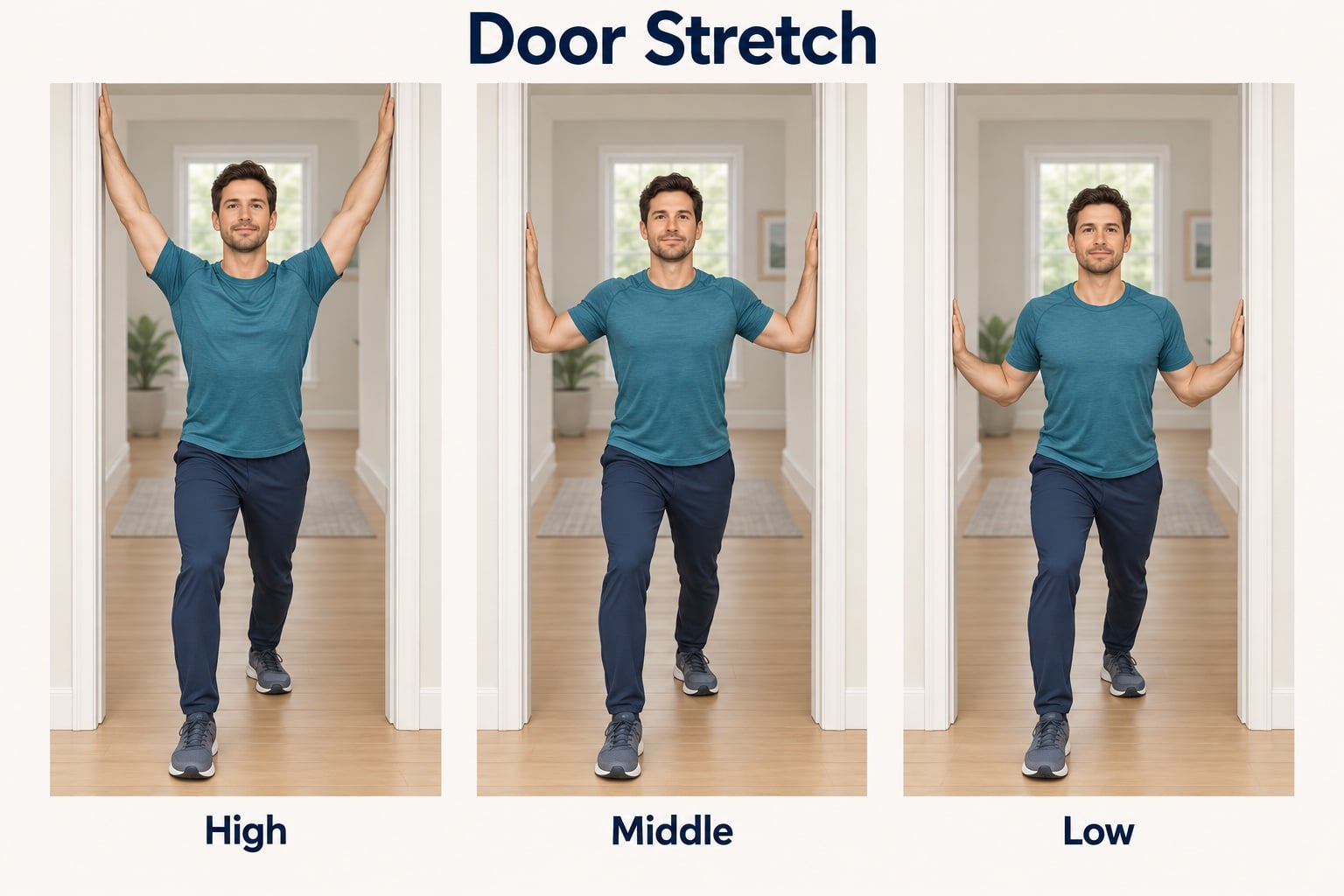

- Stand in a doorway with one foot slightly in front of the other. Start with your arms up high, supported by the door frame.
- Gently shift forward until you feel a mild stretch across your chest. Keep your neck relaxed and avoid arching your back.
- Lower your arms into different positions, as shown, to stretch at different angles. Do not force your shoulders.
Hold / repetitions: Hold for 30–60 seconds; complete 2–3 sets.
02 / Chin Tuck
This movement practices drawing the head back over the shoulders without looking down.
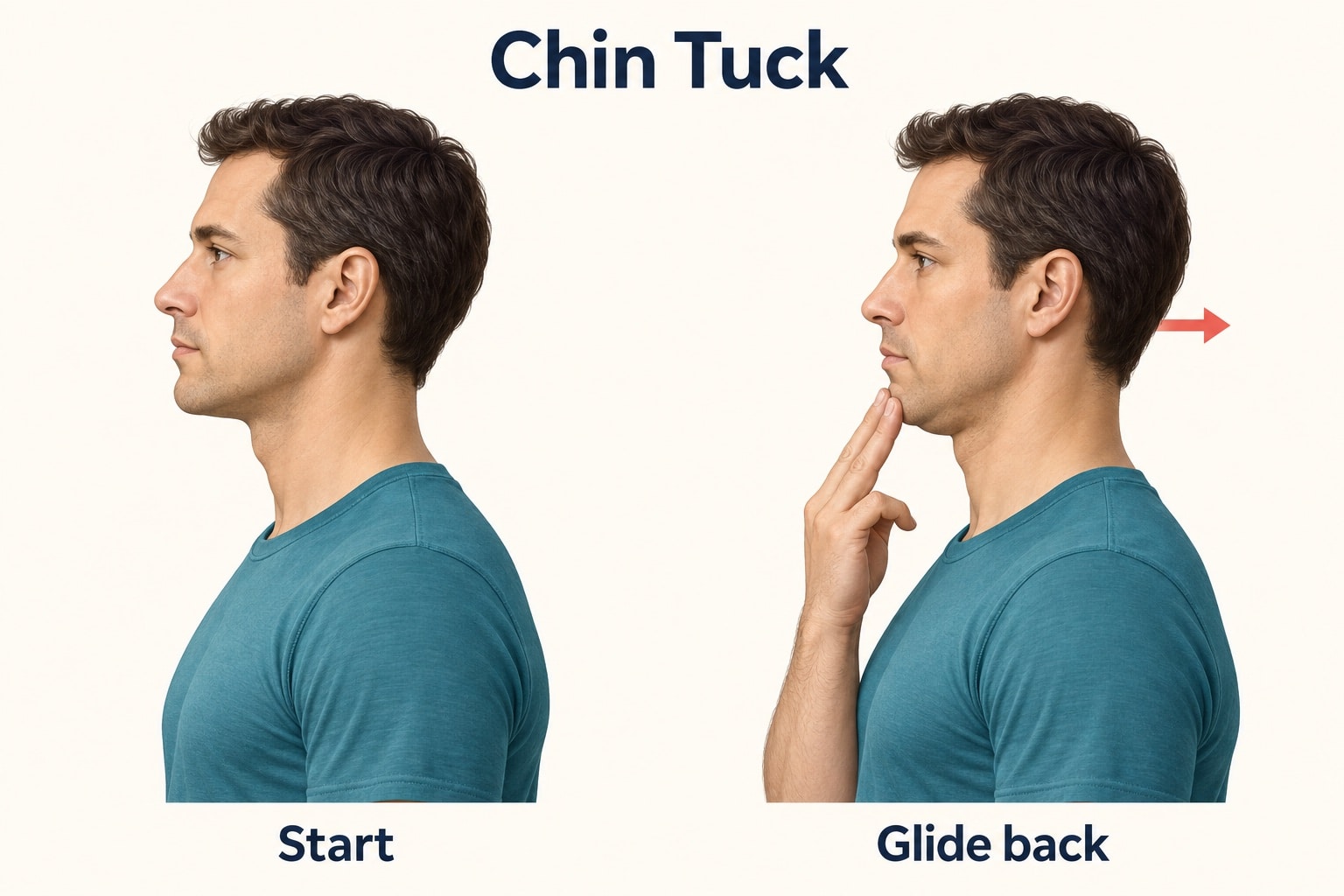
- Sit or stand with your shoulders rolled back and down.
- Place two fingers lightly on your chin.
- Slightly tuck your chin and move your head back. Use your fingers as a guide rather than pushing.
- Keep your eyes level and your neck tall; avoid tipping your head up or down.
Hold / repetitions: Hold for 3–5 seconds; repeat 10 times.
03 / Wall Angels
This exercise combines shoulder movement with support from the wall.
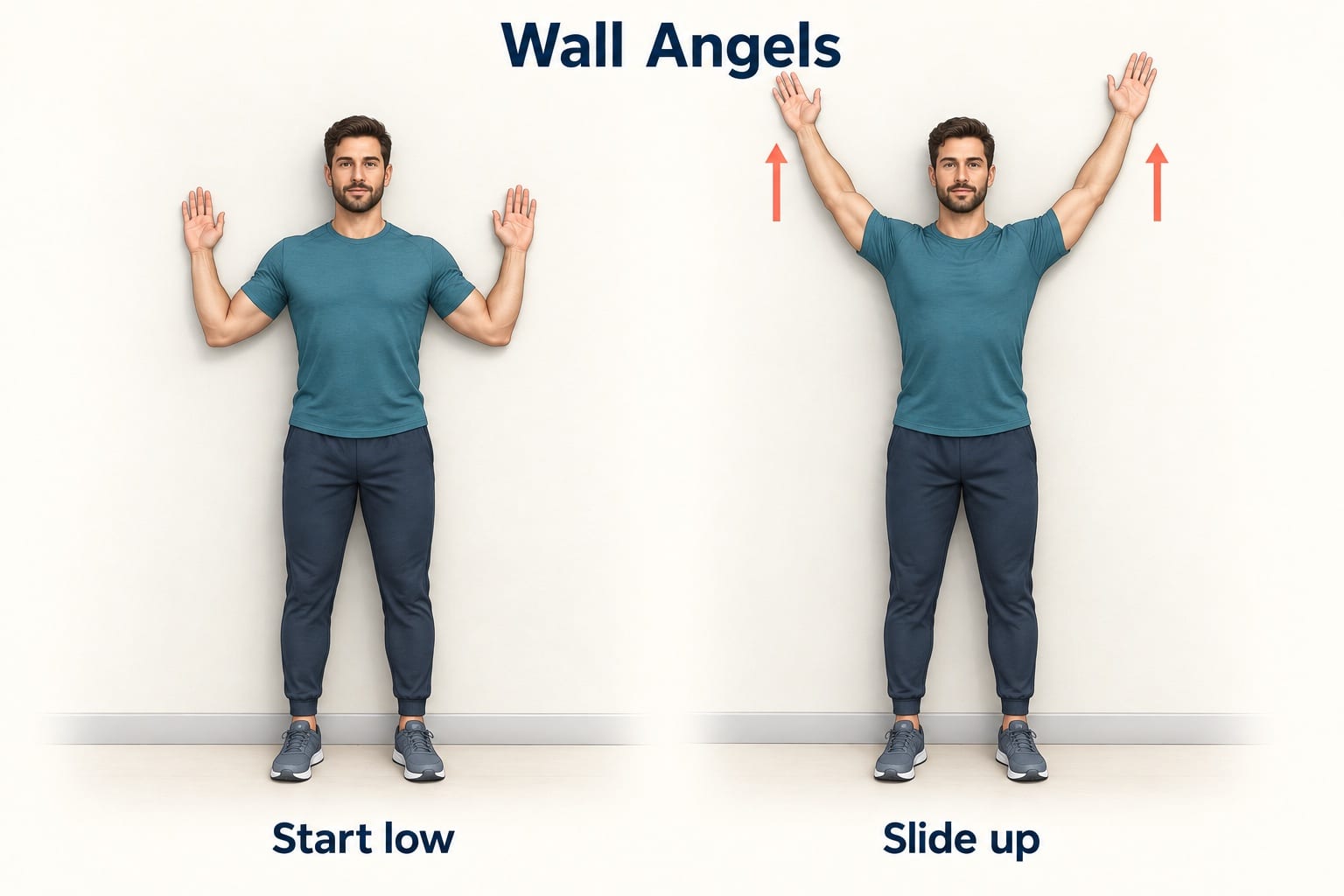
- Stand with your back against the wall, facing away from it. Keep your head and upper back supported against the wall without forcing contact.
- Draw your shoulders back and down, and bend your elbows into the starting position shown.
- Slide both arms upward along the wall within a comfortable range. Hold at the top for 3 seconds, then slide back down.
- Keep your shoulders relaxed and avoid arching your lower back to raise your arms farther.
Hold / repetitions: Hold for 3–5 seconds; repeat 10 times.
04 / Seated Rows
Seated rows work on upper-back strength and shoulder blade control using an elastic band.
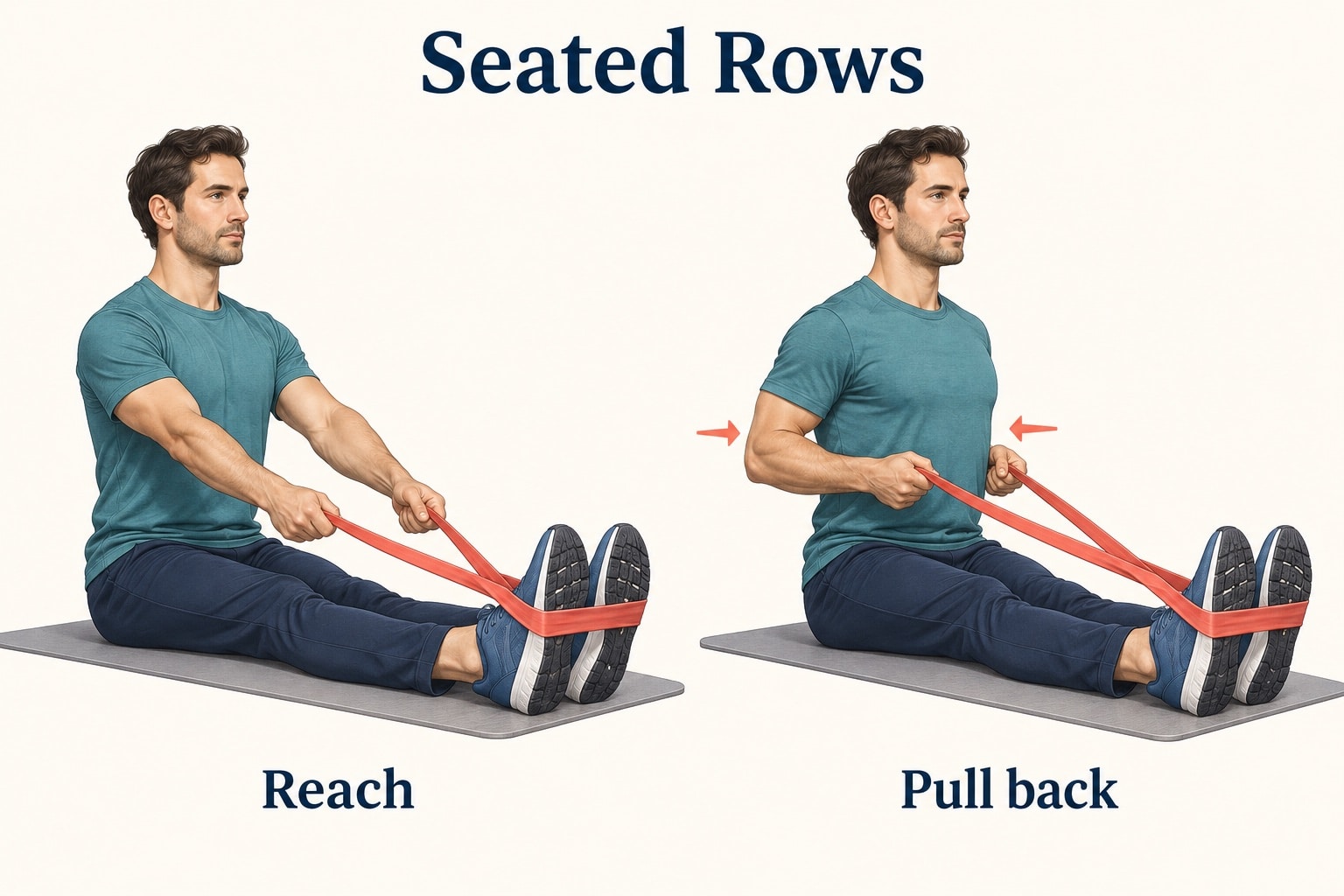
- Sit on the floor with your legs straight in front of you.
- Wrap an elastic exercise band securely around your feet and cross the ends over each other.
- Sit up straight, draw your shoulder blades back and pull the band toward yourself, bringing your elbows close beside your body. Keep your shoulders down and avoid leaning backward.
- Return slowly to the starting position. Check the band for damage and keep it secure around your feet.
Hold / repetitions: Complete 10–12 repetitions for 3 sets.
Use controlled, comfortable movements
Follow the hold times and repetitions listed for each exercise. Rest between sets and focus on your form. Your clinician can help adjust the range, resistance and number of repetitions to your needs.
What does the research say? A systematic review of therapeutic exercise for forward head posture
Make your desk work for your body
- Bring the screen toward eye level. Keep it directly in front of you so you can look ahead comfortably.
- Support your feet and forearms. Adjust your chair or use a footrest, and keep the keyboard and mouse within easy reach.
- Raise your phone when practical. Support your arms so your shoulders can stay relaxed.
- Change position regularly. Try a brief movement break every 30–60 minutes, adjusting the timing to your comfort and work.
If desk work consistently triggers symptoms, explore our guide to neck pain causes and care in Omaha. Pain traveling into an arm deserves a closer look than a posture reminder.
How posture can affect your health
Comfort, movement and energy: Sustained awkward positions may contribute to neck, shoulder and back discomfort, stiffness and muscle fatigue. Comfortable alignment, strength and flexibility help your muscles and joints share the work of supporting your body and moving through the day.
Breathing and abdominal pressure: Slumping can affect chest and diaphragm movement. A comfortable upright position may allow easier deep breathing. Brown University Health also notes that increased abdominal pressure may contribute to heartburn, digestive discomfort and stress-related urinary leakage. Persistent digestive or bladder symptoms need evaluation rather than being attributed to posture alone.
Build better habits: Combine the exercises above with regular position changes and daily activity. Aim for relaxed, varied movement rather than holding yourself rigidly upright.
Source: Brown University Health: Posture and How It Affects Your Health.
Common questions about improving posture
Can exercises correct forward head posture or rounded shoulders?
They may improve movement control, strength and some posture measurements. Progress depends on your starting point and the cause of the position. The goal is easier movement and better tolerance for daily activities, with a routine that fits you.
How long does posture correction take?
There is no universal timeline. Notice whether sitting, turning your head and getting through your workday become more comfortable over the following weeks. If symptoms persist, worsen or keep returning, get an assessment rather than pushing harder.
Should I hold my shoulders back all day?
No. Constantly bracing or squeezing your shoulders can become tiring. Practice relaxed positions, vary how you sit and stand, and build strength gradually.
Does poor posture cause all neck and back pain?
No. Muscles, joints, discs and nerves can produce overlapping symptoms. Numbness, tingling, weakness or pain that spreads into an arm or leg should not automatically be blamed on posture.
Further reading: The NHS offers general guidance on gentle seated movement and flexibility exercises.
WHEN EXERCISES AREN’T ENOUGH
If posture is already a significant concern, here is how we can help
If sitting, standing or looking down is already painful, the next step is to understand what is causing your symptoms. At Life Source Chiropractic in Omaha, Dr. Jason Wiese evaluates your history, movement and examination findings to recommend care that fits your needs.
Our Paragon Method brings together treatments selected for the individual. Your plan may include:
- Corrective chiropractic care: techniques chosen to address restricted joint movement and mechanical discomfort.
- Corrective physical therapy and rehabilitation: targeted exercises to develop strength, movement control and tolerance for work and daily life.
- Spinal molding: positioning techniques that may be included in an individualized spinal care plan when appropriate.
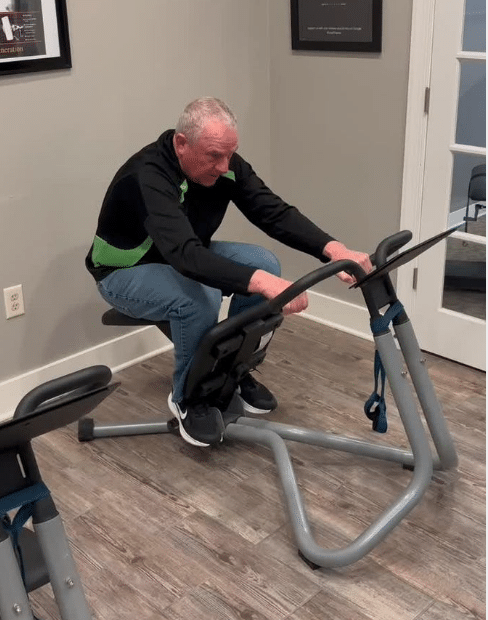
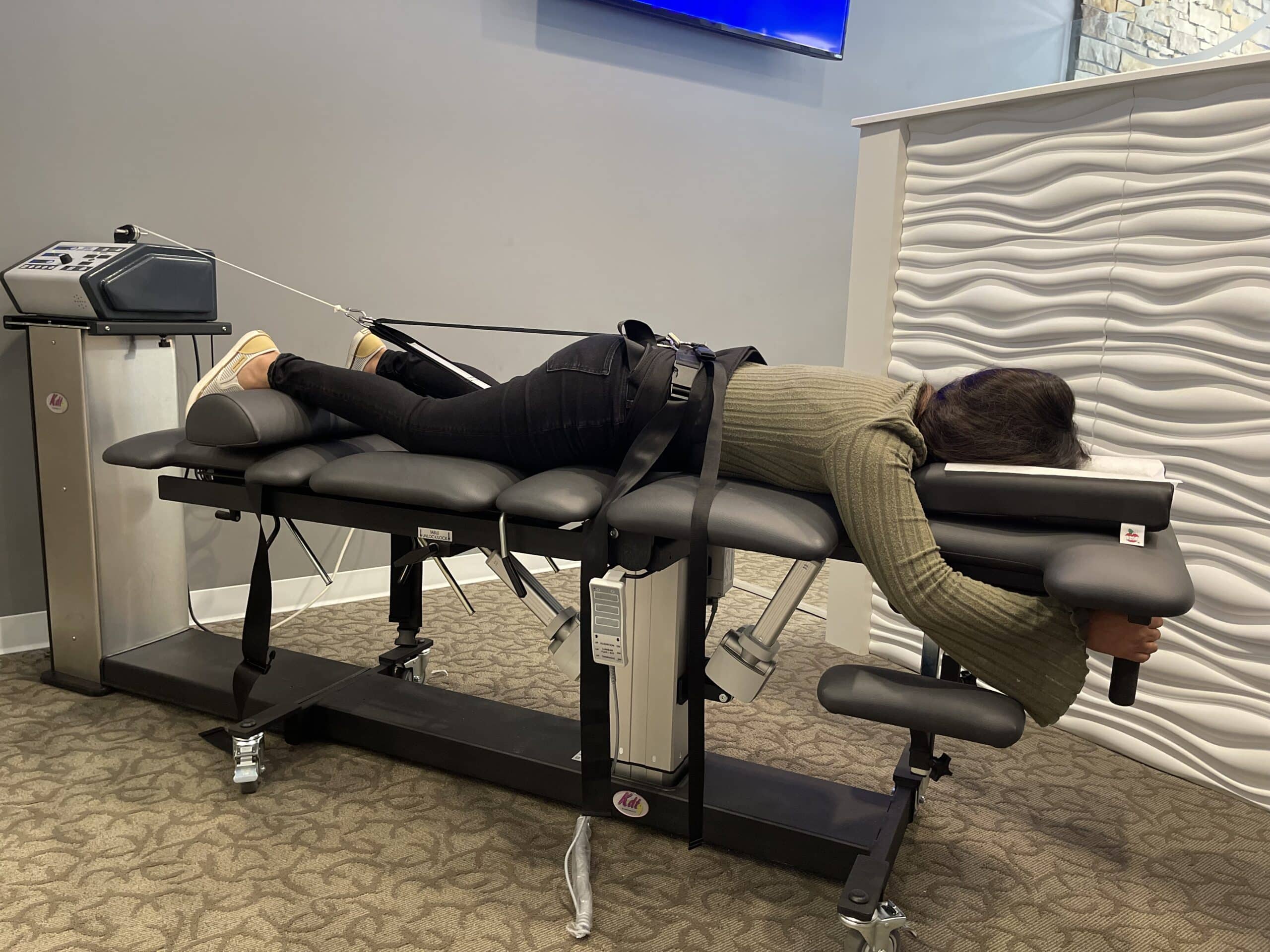
- Spinal decompression: controlled traction that may be considered for selected disc-related or nerve-related symptoms after evaluation.
- ShockWave Therapy: We use SoftWave therapy in our office. It is an additional option for selected soft-tissue complaints when it fits your findings.
You may need some of these options rather than every treatment. We explain the findings, set practical goals and adjust recommendations to your progress. When another type of care is needed, we can recommend an appropriate next step.
Let’s make your day more comfortable
Tell us what hurts, what brings it on and what you want to get back to doing. We’ll help you understand your care options.
Schedule a posture and pain evaluation →
Call (402) 934-4220
Life Source Chiropractic
15475 Ruggles St, Suite 110, Omaha, NE 68116
Near 156th and Maple, convenient to West Omaha, Elkhorn and Bennington.